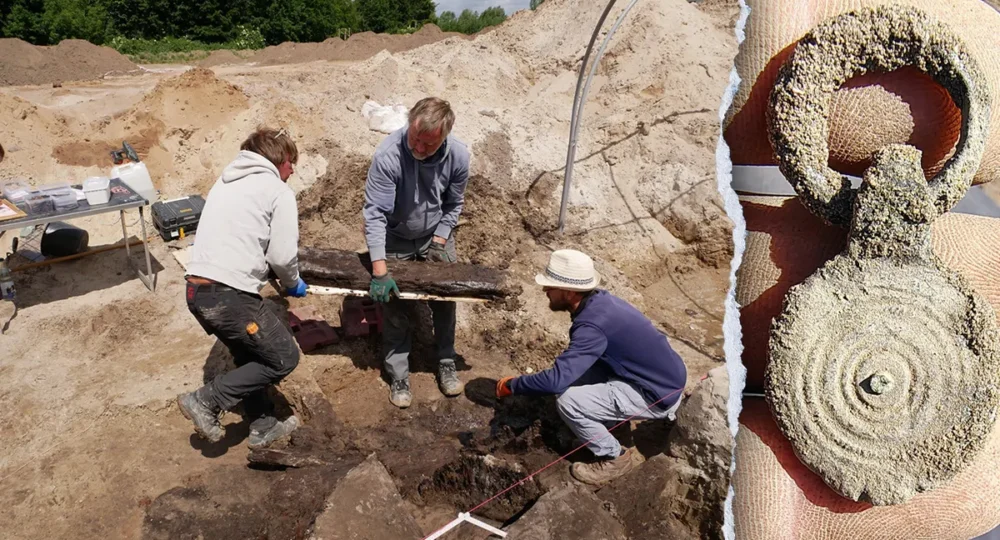
Lost Roman Settlement Unearthed During Major Archaeological Excavation
Archaeologists have uncovered the remains of a lost Roman settlement during a major excavation project, revealing new insights into daily life, trade, and architecture in the ancient Roman world. The discovery, described as one of the most significant finds in recent years, is helping historians better understand how Roman communities expanded and thrived across Europe and beyond.
The settlement was discovered during a large-scale excavation led by a team of researchers using advanced surveying tools, including ground-penetrating radar and aerial drone mapping. What initially appeared to be scattered stone fragments turned out to be the foundations of buildings, streets, and defensive structures.
A Well-Planned Roman Community
Preliminary analysis suggests the settlement dates back nearly 2,000 years, likely during the height of the Roman Empire. Excavations have revealed:
-
Stone-paved roads
-
Residential houses with courtyard designs
-
A central marketplace area
-
Remains of a bathhouse complex
-
Pottery, coins, and everyday tools
The layout indicates a carefully planned community, typical of Roman engineering and urban design. The presence of a bathhouse suggests the settlement was not merely a military outpost, but a thriving civilian town.
Artifacts Tell a Story
Among the most exciting discoveries were Roman coins bearing the images of emperors, fragments of decorated pottery, and jewelry items believed to have belonged to wealthy residents. These artifacts help establish a timeline for the settlement and offer clues about trade networks and economic activity.
Researchers also uncovered remnants of food storage containers and farming tools, suggesting the community relied on both agriculture and trade for survival.
Technology Meets Ancient History
Modern archaeological methods played a crucial role in the discovery. Ground-penetrating radar allowed scientists to identify buried structures without immediately disturbing the site. This non-invasive technology ensures careful preservation while guiding targeted excavations.
Experts believe additional structures remain buried beneath the soil, and further digs are expected to reveal more about the settlement’s size and significance.
Rewriting Regional History
The discovery of this Roman settlement could reshape understanding of Roman influence in the region. It provides evidence that the area may have been more economically and strategically important than previously thought.
Archaeologists hope continued research will uncover inscriptions or official records that may reveal the original name of the settlement and the identity of its inhabitants.
As excavations continue, the lost Roman community is gradually emerging from centuries of obscurity, offering a remarkable glimpse into life during one of history’s greatest empires.